


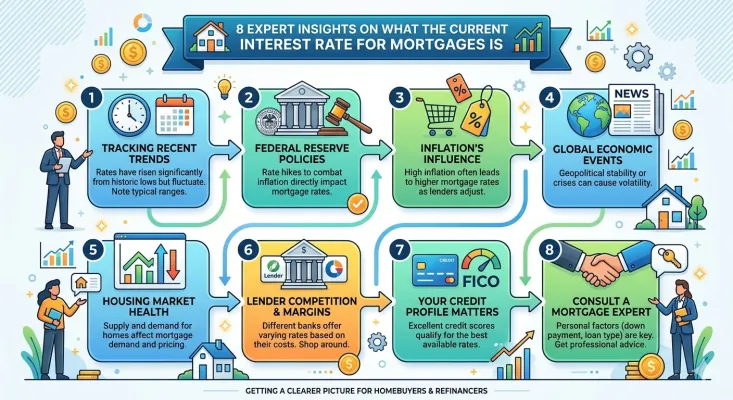
8 Expert Insights on What the Current Interest Rate for Mortgages
Understanding what the current interest rate for mortgages is essential for anyone thinking about buying a home, refinancing, or evaluating their long‑term financial goals. Mortgage interest rat es can dramatically influence how much your monthly payment will be, how much interest you pay over time, and whether now is a smart time to take the plunge into homeownership. In this SEO‑optimised guide, we unpack what the current interest rate for mortgages looks like in 2026, why it matters, how it’s determined, the variations you may see, and what homebuyers and homeowners need to know before locking in a rate.
What Is the Current Interest Rate for Mortgages in 2026?
As of April 2026, the current interest rate for mortgages in the U.S. remains above historical lows seen in recent years, reflecting broader economic conditions like inflation and Federal Reserve policy actions.
According to recent surveys and updates:
The average 30‑year fixed‑rate mortgage stands around 6.3% to 6.34%. Money
Some surveys show the benchmark 30‑year fixed APR at about 6.29%, with 15‑year fixed near 5.5%. Forbes
These numbers are national averages and can differ by lender, loan type, borrower credit profile, and location.
Why the Current Interest Rate for Mortgages Matters
When you’re evaluating what is the current interest rate for mortgages is, you’re not just tracking a number — you’re measuring the cost of borrowing money to buy a home. Mortgage rates influence:
Monthly payments: Higher rates mean more monthly interest costs.
Total lifetime cost of the loan: Even a small difference in rate can add tens of thousands over 30 years.
Borrowing power: Lower rates may allow you to afford a larger home for the same monthly payment.
How Mortgage Interest Rates Are Determined
Mortgage lenders set interest rates based on several factors—both market‑wide and personal. Here’s how the current interest rate for mortgages is influenced:
1. Market and Economic Forces
Mortgage rates often move with long‑term bond yields, especially the U.S. 10‑year Treasury yield. When economic data suggests rising inflation or stronger growth, mortgage rates tend to rise too.
2. Federal Reserve Policy
While the Federal Reserve doesn’t directly set mortgage rates, its actions on short‑term interest rates influence borrowing costs across the economy. High federal fund rates usually put upward pressure on mortgage rates.
3. Lender Risk and Borrower Profile
Your personal rate can be higher or lower than the national average depending on the following:
Credit score
Debt‑to‑income ratio
Down payment amount
Loan type (e.g., conventional vs. FHA)
Current Mortgage Interest Rates by Loan Type
Below is a snapshot of current average mortgage interest rates (approximate) for common loan types in 2026:
Loan Type
Average Interest Rate*
Notes
30‑Year Fixed
6.30% – 6.34%
Most common long‑term mortgage
15‑Year Fixed
~5.5%
Lower rate, higher monthly payment
FHA 30‑Year Fixed
~6.0% – 6.5%
Government‑backed for lower down payments
VA 30‑Year Fixed
~6.0%
Competitive for eligible veterans
Jumbo 30‑Year Fixed
~6.75%
Larger loan amounts often have higher rates
*Figures reflect recent surveys and may vary slightly among sources.
These averages help answer what is the current interest rate for mortgages in a way that’s useful for borrowers comparing loan types.
Historical Context: Are Today’s Rates High?
If you’re wondering whether today’s rates are "normal", the short answer is that they are high relative to the past decade but moderate compared to long‑term history:
In recent years, rates once dipped below 3% – historic lows. first tuesday Journal
In the early 1980s, rates soared above 16%.
Today’s average range around the low‑to‑mid‑6% zone is above the post‑2008 norm but below historical highs.
Understanding this context helps frame what the current interest rate for mortgages is as neither unprecedented nor unsustainably high — just reflective of broader economic cycles.
How Current Interest Rates Affect Home Affordability
Mortgage interest rates directly impact how much home you can afford. Consider two families with identical finances: if one locks a loan at 5% and another at 6.5%, the second pays significantly more interest, potentially reducing borrowing power.
Here’s how monthly payments change based on the current interest rate for mortgages:
Loan Amount
30‑Year Rate
Monthly Payment*
$300,000
5.0%
$1,610
$300,000
6.3%
$1,857
$300,000
6.75%
$1,946
*Principal & interest only (excludes taxes and insurance)
This shows that even modest shifts in the current interest rate for mortgages can add hundreds of dollars to your annual costs.
Current Refinance Interest Rates
The “current interest rate for mortgages” also applies to people refinancing existing loans. Refinancing can:
Lower monthly payments
Shorten loan term
Reduce lifetime interest paid
Refinance rates, however, can be slightly higher than purchase rates due to lender pricing differences.
Factors That Could Change the Current Interest Rate for Mortgages
Interest rates fluctuate constantly. Here are factors that could push rates higher or lower:
Potential Drivers Lowering Rates
Slower inflation
Improved global economic stability
Federal Reserve signaling future rate cuts
Potential Drivers Raising Rates
Rising inflation
Strong employment and wage growth
Higher bond yields
Because mortgage rates are influenced by so many economic forces, answering 'What is the current interest rate for mortgages?' is a snapshot — not a static number.
When to Lock Your Mortgage Rate
Locking your rate means agreeing to a specific interest rate with a lender before closing. When determining what is the current interest rate for mortgages is during your buying process, consider the following:
Market volatility
How long you expect before closing
Your tolerance for risk
Rate locks typically last 30, 45, or 60 days — and protecting today’s rate could save money if rates rise.
Mortgage Interest Rate Trends: What’s Ahead?
Mortgage forecasts suggest rates may remain elevated in 2026, although economists are divided on how far or fast they will decline. Some forecasts project that mortgage rates could drift back down below the mid‑6% range toward the end of the year, while short‑term movement remains unpredictable.
FAQs: Current Interest Rate for Mortgages
Q1: What is the current interest rate for mortgages?
A: As of April 2026, the current interest rate for mortgages — particularly the 30‑year fixed rate — is roughly 6.3% to 6.34% on average, though individual borrower rates may vary.
Q2: Are mortgage rates expected to go down?
A: Some forecasts suggest a possibility of modest declines later in the year, but rates remain elevated above historical lows.
Q3: Do I get the average rate shown in national data?
A: Not necessarily. Your rate depends on credit score, down payment, loan type, and lender. The national average is a benchmark, not a guarantee.
Q4: What loan type has the lowest current interest rate for mortgages?
A: Shorter‑term loans like 15‑year fixed typically have lower rates than 30‑year fixed, but they also come with higher monthly payments.
Q5: How often do mortgage rates change?
A: Mortgage rates change daily based on economic conditions, lender pricing, and market data.
Q6: Should I lock in a rate when the current interest rate for mortgages drops?
A: Locking can protect you from future increases, but it’s best discussed with your lender based on timing and your closing date.
Final Takeaways
Understanding what is the current interest rate for mortgages is essential for making informed borrowing decisions. Rates in 2026 are above recent historical lows but remain below long‑term historic peaks. Whether you’re buying your first home, refinancing to save money, or evaluating your financial future, knowing current trends and how they affect affordability can help you choose the right strategy.